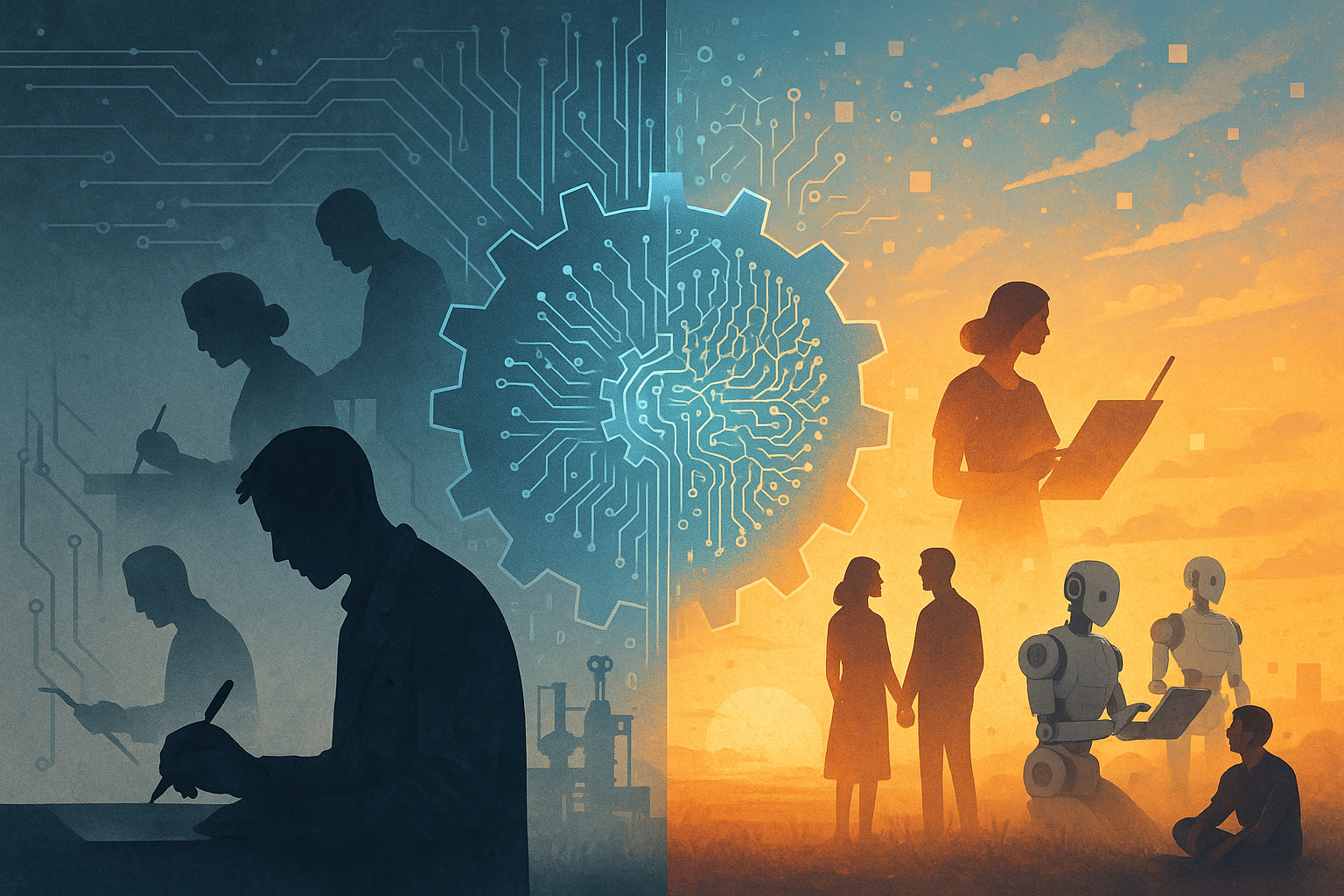
The prospect of a medicine supported by super-advanced Artificial Intelligence (AI) arouses both fascination and unease. On one hand, there is the possibility of ultra-fast diagnoses, personalized therapies, and accelerated drug discovery. On the other, ethical dilemmas arise, along with the risk of dehumanizing care and questions about the deeper meaning of what it is to be a physician.
Some refer to the “clinical self” as a stance that transcends technical skills, encompassing a broader view of the patient and of medical practice itself. In this view, the clinician is not merely an executor of protocols, but a guardian of values, a “conductor” who harmonizes scientific knowledge with its human and social dimensions.
The Rise of Autonomous AIs
It is anticipated that, within a few years, AI agents will be capable of:
-
Analyzing vast medical databases to provide precise diagnoses and prognoses;
-
Learning continuously, rewriting their own code and advancing at unprecedented speed;
-
Generating research hypotheses and running simulated experiments in record time, accelerating the development of new therapies.
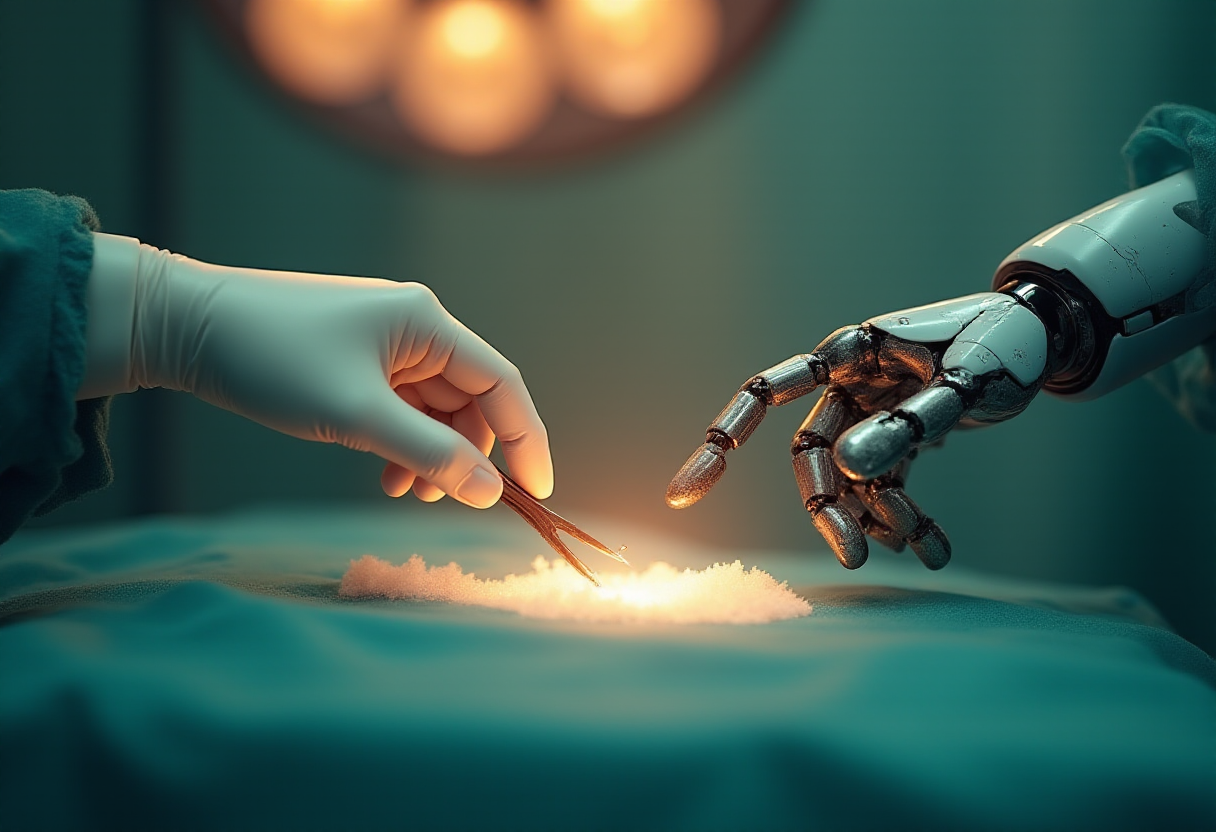
At this pace of evolution, medical practices once regarded as complex may become routinely automated. AI-guided surgery, remote patient monitoring via body sensors, and the integration of assistive robots in hospitals no longer belong to science fiction. Everything indicates that these scenarios will draw ever closer, challenging our understanding of the health professional’s role.
The “Clinical Self” in the Face of Hypertechnology
As AI matures, so does the fear that the essence of care may be lost amid the exuberance of technology. The stance of those who value the wholeness of the patient involves:
-
Systemic Vision:
The physician does not act as an isolated specialist, but as an integrator of knowledge. He considers the physical, emotional, social, and cultural aspects in understanding illness and in choosing therapy. -
Empathic and Reflective Listening:
While AI can “read” vital signs and correlate data in seconds, only a human being can truly embrace the patient’s pain and anguish in all its subjectivity. Listening beyond what is said is an art that combines time, presence, and sensitivity. -
Critical Resilience:
In a world overtaken by guidelines and digital tools, the physician must retain the capacity to question and weigh. It is essential to know when to follow a protocol and when to personalize the approach, remembering that each clinical case unfolds within a unique context. -
Ethical Responsibility:
It falls to the physician to defend the patient against the possible abuses of technology — from data protection and privacy to the refusal of unnecessary or potentially harmful procedures. AI must be a means, not an end, in the pursuit of the patient’s well-being.
Paradoxes and Dilemmas of the Future
From the moment AI attains capabilities that rival or surpass those of human beings, certain paradoxes intensify:
-
Efficiency Versus Humanization:
If algorithms perform much of the work — whether diagnoses, prescriptions, or monitoring — the physician’s time for personal contact grows. Yet economic and organizational pressure for greater “productivity” may end up undermining this gain, making the doctor-patient relationship even more impersonal. -
Safety Versus Innovation:
Powerful technologies can facilitate the creation of bioweapons or enable data breaches. How do we balance rapid development with sensible regulation that prevents destructive uses? -
Inequality Versus Universal Access:
AI could democratize health care, bringing cutting-edge knowledge to remote areas. However, without adequate policies, the concentration of resources in large corporations or countries may widen the gap between those who have access to advances and those who do not.
The Call to Human Depth
As medicine progresses toward what we call “superintelligence,” the importance of a practice grounded in humanistic values only grows stronger. The “clinical self” is not an obsolete concept; on the contrary, it becomes an essential pillar for:
-
Maintaining Balance:
Faced with increasingly complex guidance from sophisticated algorithms, it is the health professional who judges what, when, and how to apply it. Clinical decision-making is always an act of personal responsibility. -
Sustaining Trust:
More vulnerable patients may not feel comfortable being cared for by machines alone. The presence of a physician who inspires trust, shows empathy, and offers reassurance throughout the healing process is irreplaceable. -
Recognizing Limits and Potential:
However good AI may be, there will always be gray areas where human subjectivity and ethics prevail. In this sense, the physician becomes the one who bridges the precision of data and the concrete lived experience of the patient.
A Hopeful Outlook: Revolution with Humanity
The future undoubtedly holds radical transformations in the way we conduct diagnoses, treatments, and medical research. The learning speed of AIs, their capacity for data analysis and for creating new solutions, are truly impressive. We can envision:
-
Eradication or greater control of chronic diseases;
-
Historic speed in the discovery of innovative treatments;
-
Support systems that allow the physician to devote more time to direct care.
Yet every technological revolution demands a human anchor. Medical practice, in essence, cannot be reduced to numbers and algorithms; it flourishes where there is solidarity, compassion, and genuine dialogue with those who suffer. If the future surprises us with mass automation, it falls to the clinician — the one who sees the patient as a whole person — to keep the flame of humanized care alive.
Ultimately, technology may enchant us with its almost limitless potential, but it is humanity that will give meaning to the act of caring. As machines become faster and more intelligent, the physician who cultivates sensitivity and reflection remains the fundamental link between science and life, between reason and love of neighbor. This, in the end, is the true legacy of the “clinical self”: to remind us that, in a world of accelerating change, to care is still a verb that calls for affection, respect, and real presence.
https://youtu.be/Rd9KDcGjHqQ
Prof. Dr. Alexandre Campos Moraes Amato
Doctor of Science, FM-USP (University of São Paulo)
President of the Brazilian Lipedema Association (www.lipedema.org.br)
Vascular, Endovascular, and Vascular Ultrasound Surgeon certified by the AMB, SBACV (Brazilian Society of Angiology and Vascular Surgery), and CBR (Brazilian College of Radiology)
General Surgeon certified by the CBC (Brazilian College of Surgeons)
MBA in Health Management from FGV