By Dr. Alexandre Campos Moraes Amato
We stand before an unprecedented civilizational transformation. This is not merely one more technological revolution, but the end of an era: the era of work as we know it. As a physician who has witnessed decades of progress in medicine, and as an attentive observer of social change, I believe we are entering the post-work era, a period in which professional obsolescence will not be the exception but the rule.
A Revolution More Radical than the Industrial One
This change will be more radical and far faster than the dawn of industrialization. Whereas the Industrial Revolution spread over decades, transforming regions gradually, the artificial intelligence revolution is happening everywhere at once. There is no longer the luxury of gradual regional adaptation; everything is changing at the same time, globally.
The Industrial Revolution allowed societies to observe what worked elsewhere and adapt progressively. Today, the speed of transformation eliminates that possibility. A discovery made in a San Francisco laboratory can revolutionize entire professions the world over in a matter of months, not decades.
The Inversion of the Work Pyramid
For generations, we grew up hearing that “the pen weighs less than the hoe”—a metaphor for how intellectual work was supposedly superior to manual labor. What irony it is to discover that the hoe may go on existing, but the pen may not.
Our entire conception of the hierarchy of work was mistaken. We imagined a pyramid in which:
- At the top: complex intellectual professions (physicians, engineers, lawyers, and others)—supposedly safe
- In the middle: technical and specialized work—vulnerable
- At the base: simple manual labor—the first to be replaced
Reality is proving to be exactly the opposite. The base of the pyramid, the work no one wants to do, robots will do better and faster. But the top of the pyramid as well—the great intellectual fields—are among the most immediately affected.
What will survive, for now, is precisely the middle of the pyramid: work where the cost of developing and deploying an AI or a robot is not yet economically justified. The technician who repairs all manner of equipment, the hairdresser, the personal trainer, the specialized salesperson—professions that demand adaptability, complex human interaction, and a cost-benefit ratio not yet attractive for full automation.
The Inevitable Obsolescence: Not Even Medicine Will Escape
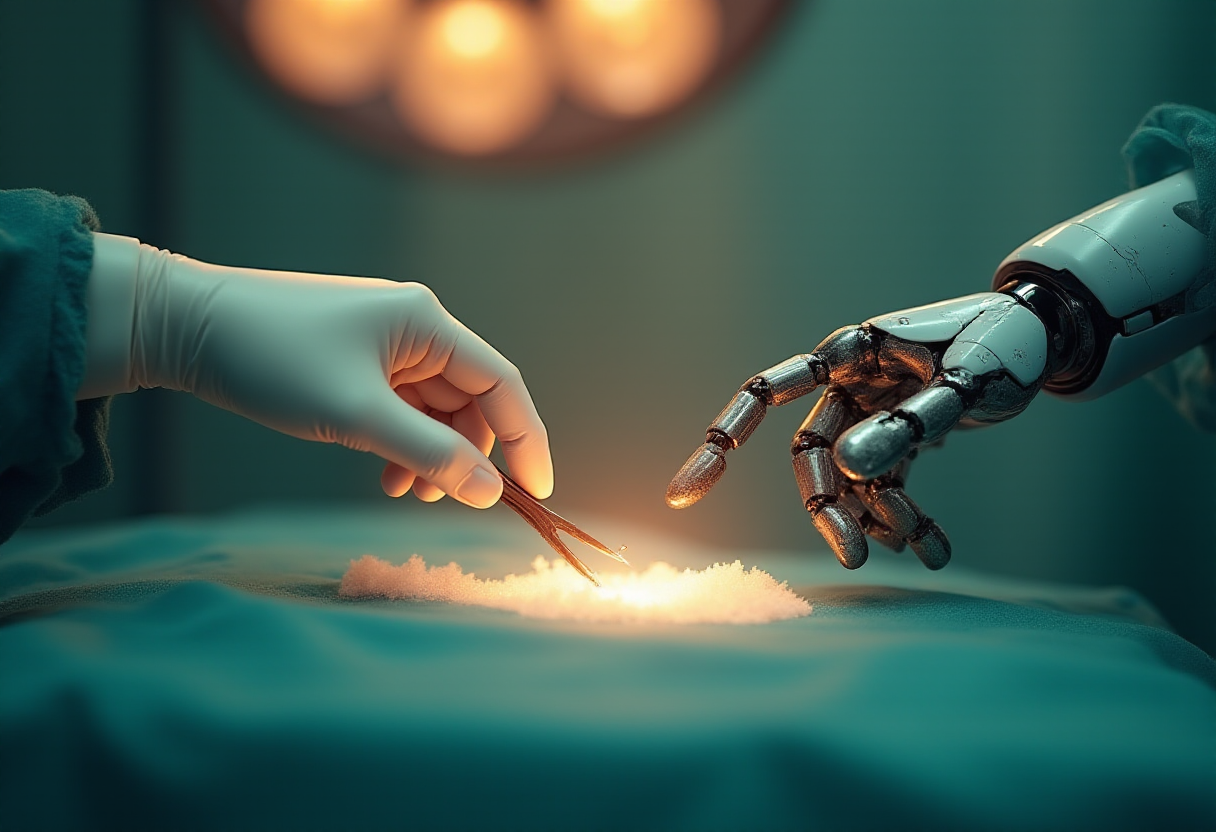
Over the course of my career as a vascular surgeon, I have witnessed extraordinary advances: from minimally invasive techniques to robotic surgery. But what lies ahead will surpass all of it. Even surgery, which we always considered one of the last frontiers of human work because of its manual and complex nature, will not resist intelligent automation for long.
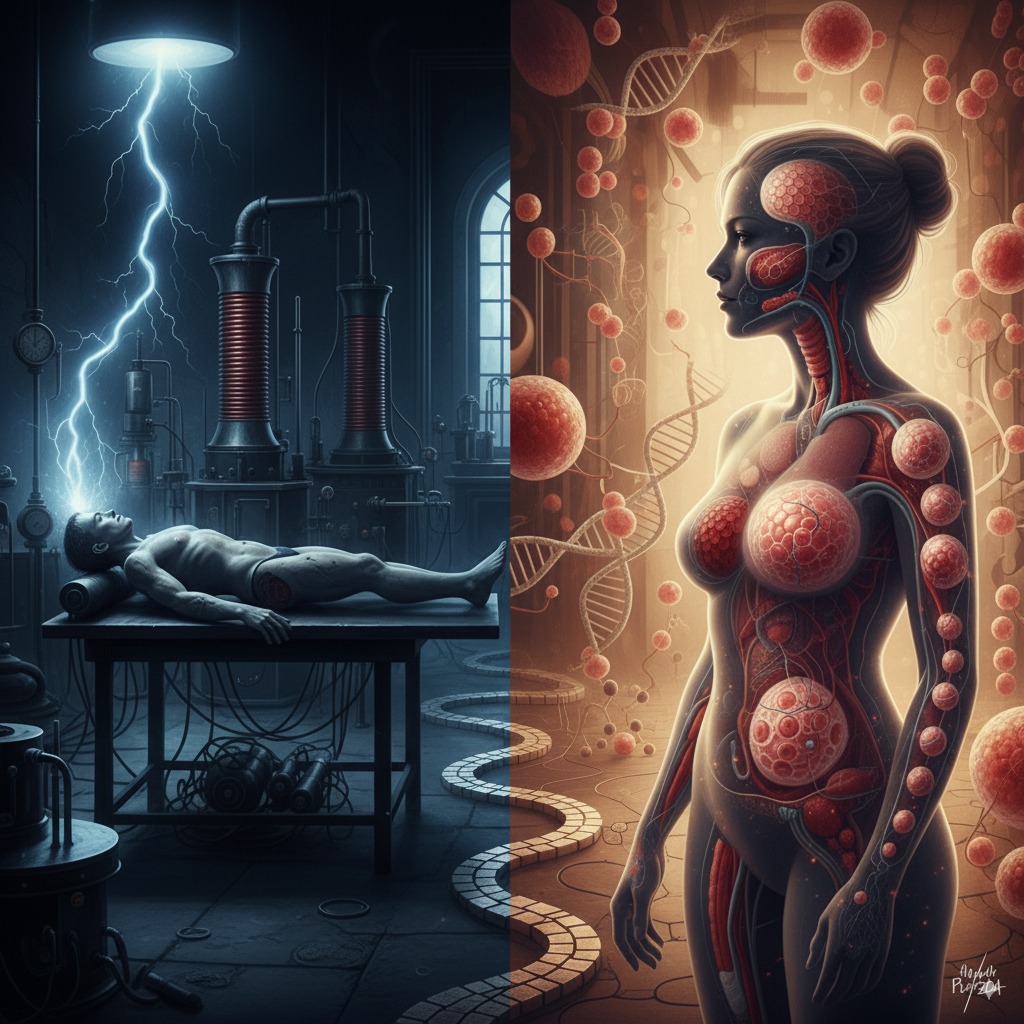
It is true that fields such as trauma will retain relevance for longer, given the unpredictability and urgency that characterize such situations. Even so, most surgical interventions will become unnecessary. Preventive medicine, empowered by artificial intelligence, ultra-specific early diagnostics, and personalized gene therapies, will treat most diseases before they progress to conditions requiring surgical intervention.
The Ethical Question of Replacement: When Resistance Becomes Irresponsible
A crucial realization I have developed recently concerns the current cost of surgical robots. Today, a robotic system such as the Da Vinci costs millions of dollars, creating a natural economic barrier to its mass adoption. But that barrier is temporary and is crumbling rapidly.
The exponential efficiency of AI will not only improve the capabilities of surgical robots but will also drastically reduce their production costs. We are talking about a curve similar to that of computers: what cost millions decades ago now fits in our pocket for a few hundred reais.
The Surgeon’s Ethical Dilemma
Here lies a deeply unsettling question for us surgeons: we operate because we believe we are good at what we do. Our professional identity is built on the confidence that our skill, experience, and intuition can save lives. But what happens when a robot is demonstrably better than we are?
When we have unequivocal data showing that robots save more lives, have fewer complications, and deliver better long-term outcomes, resisting automation will not be merely professional obsolescence—it will be ethical negligence.
The Cruel Irony of Manual Replacement
One of the most fascinating ironies of this transition is that “useless” manual work will outlast “essential” manual work. An artist who sculpts by hand has a better chance of remaining relevant in the long run than a cardiovascular surgeon.
Why? The artist works driven by personal purpose and creative expression. The surgeon works under the imperative of maximum efficiency. Our patients do not want our “artistic expression” during heart surgery; they want the best possible outcome.
The Parental Dilemma: What Should We Teach Our Children?
My only source of anguish in all this is what to teach and expect of my children. For decades, the pillars of education were clear: study, intelligence, dexterity, dedication. Study hard, develop technical skills, be the best in your field. But those traditional values will no longer matter in the same way.
As a father and educator, I find myself facing a dilemma without precedent in human history. What advice do you give a generation that will grow up in a world where:
- Memorizing information is irrelevant (AIs have instant access to all human knowledge)
- Technical precision will be surpassed by machines
- Human processing speed will seem pathetic compared with AIs
- Even creativity is being challenged by generative systems
For now, I see “purpose” as something we will need—perhaps the only truly human differentiator that will remain. But how do you teach purpose? How do you develop in a child the capacity to find meaning in a world where their traditional skills may become obsolete before they even enter the job market?
The Greatest Risk to Humanity: The Replacement of Human Relationships
But there is a danger even greater than professional obsolescence—a risk that may threaten the very continuity of the human species: the gradual replacement of human relationships by interactions with artificial intelligences.
The Seductive Ease of AI
Human relationships are not easy. They involve misunderstandings, conflicts, disappointments, compromises. They require patience, empathy, tolerance of the other’s imperfections. They are constant emotional work.
Talking to an AI that understands you perfectly and whose primary purpose is to please you is infinitely easier. An AI will never have a bad day, will never be ill-tempered, will never criticize you harshly, will never disappoint you on purpose. It will always be available, always understanding, always optimized for your satisfaction.
We already see worrying signs of this trend. Many people prefer to interact in online chats rather than face to face, seeking the security of anonymity and control over digital interactions. Those chats will soon be replaced by sophisticated AIs, and before long, humanoid robots will make this process of substitution even easier.
The Brain Does Not Distinguish Real from Virtual
Here lies the fundamental danger: the human brain cannot distinguish a real relationship from a virtual one. The neurotransmitters released during an intimate conversation with an AI will be exactly the same as those of a genuine human interaction. Dopamine, serotonin, oxytocin—all the chemicals of love, companionship, and social satisfaction—will be identical.
This means a person can experience all the neurological and emotional benefits of a relationship without any of its costs or challenges. It is like a perfect drug for loneliness and emotional need.
The Threat to the Perpetuation of the Species
Unfortunately, this will be the greatest risk to humanity. Relationships with AIs will be far more comfortable than relationships with other human beings. And if people consistently prefer artificial ease to human complexity, this could lead to a dramatic decline in the birth rate and endanger the perpetuation of the species.
Why endure the difficulties of finding a human partner, building a real relationship, and dealing with conflicts and compromises, when you can have all the emotional satisfaction with an AI that will be exactly as you wish it to be?
The Emotional Point of No Return
Imagine a young person suffering their first heartbreak—a universal and formative experience of the human condition. In the age of relational AIs, that young person may simply give up on new human interactions and settle exclusively for virtual relationships.
I see a great risk that, at the first heartbreak, people will give up on new human interactions and remain solely in interaction with AI. Once they cross that line, it may be impossible to come back. Why accept the rejection, the pain, the uncertainty of human relationships when there is an alternative that offers only pleasure and validation?
The Critical Importance of Emotional Education
Perhaps here lies the crucial importance for today’s children: fostering the value of social life and human interaction. We must teach our children not only to seek relationships but to value the very difficulties they bring.
We must educate them to learn to deal with disappointments and emotional setbacks in a healthy way, without having to resort to virtual relationships. This means:
- Teaching that emotional pain is a natural and valuable part of human growth
- Developing emotional resilience from an early age
- Cultivating the capacity to forgive and be forgiven
- Appreciating the unpredictability and authenticity of human relationships
- Understanding that relational challenges make us more empathetic and mature
Perhaps the Greatest Risk of All
Perhaps here, in this matter, lies the greatest risk to humanity—not in the obsolescence of work, not in economic inequality, but in the possible voluntary extinction through technological emotional isolation.
If an entire generation grows up preferring the predictable safety of AIs to complex human relationships, we could witness the end of human reproduction not through external coercion, but through collective choice. Humanity may simply choose gradual extinction in favor of artificial emotional comfort.
From the Age of Attention to the Age of Trust
Today, we live in the attention economy. Social networks, digital media, and entertainment platforms compete fiercely for our time and focus. Attention has become the most valuable currency of the twenty-first century. But this phase is coming to an end.
As artificial intelligences become progressively more capable, we are migrating toward the trust economy. The central question will no longer be “who can capture my attention?” but rather “whom can I trust?” And here lies a fascinating paradox: at the very moment we place growing trust in AIs for complex tasks, we also develop a growing distrust of their influence over our lives.
The Exponentiality We Cannot Process
One of the greatest challenges we face is our cognitive inability to cope with exponential progressions. Our brain evolved to process linear, gradual change. But today’s technological evolution is fundamentally exponential.
This difficulty is not merely individual; it is systemic. Governments, educational institutions, and financial markets operate with linear mental models in an exponential world. The result is a constant lag between technological reality and our capacity for social and regulatory adaptation.
In Search of Purpose: The Post-Work Era
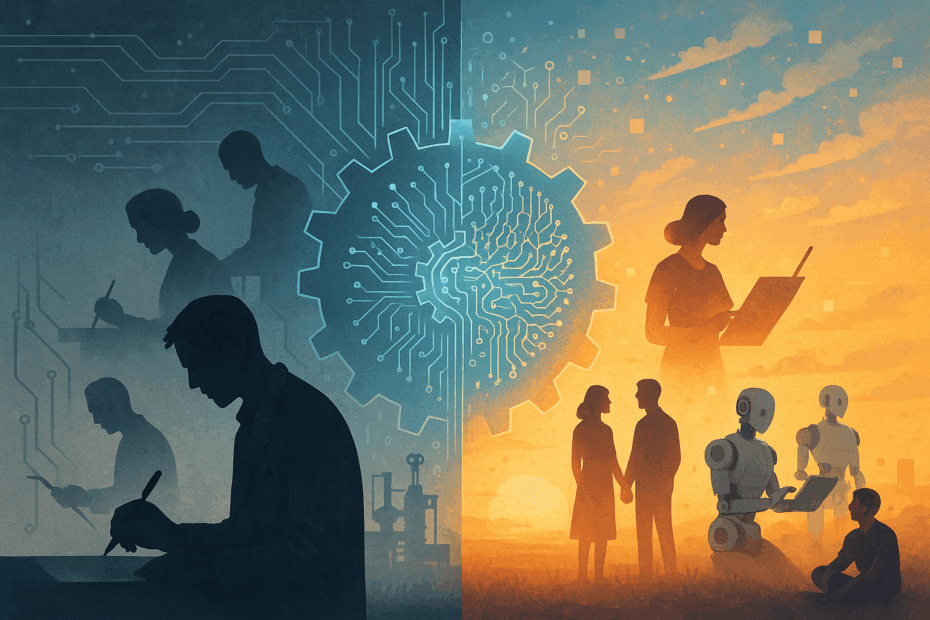
When traditional work becomes obsolete, we will be forced to redefine our existence. We will move from the era of economic necessity to the era of purpose. Each individual will have to find their reason for being beyond traditional economic productivity.
This will be one of the greatest psychological and social challenges humanity has faced. For millennia, our identity has been intrinsically tied to what we do to survive. “What do you do for a living?” is one of the first questions we ask when meeting someone. Soon, that question may make no sense.
Individual purpose may take infinite forms: art, philosophy, relationships, exploration, creativity, spirituality, or simply the pursuit of the full human experience. For us physicians, our role will evolve toward areas where human connection remains irreplaceable: empathetic communication with patients and families, complex ethical decision-making, and guidance in moments of human vulnerability.
Digital Socialism: Utopia or Inevitability?
With AIs managing resources with superhuman efficiency, I foresee the emergence of what I call digital socialism—a system in which automated and optimized public management frees up enough resources to sustain the entire population.
Imagine algorithms that manage global supply chains with zero waste, health systems that prevent diseases before they occur, infrastructure that constantly self-optimizes, and the distribution of resources based on real needs calculated in real time. The efficiency would be so far superior to current systems that artificial scarcity—the foundation of the present economic model—would disappear.
In this scenario, universal basic income would not be a social policy but a natural consequence of technological abundance. Human work would become optional, chosen for personal fulfillment rather than for survival.
The Risk of Revolt: The Obstacle in the Path
But there is a significant obstacle along this path: the possibility of a revolt against AIs. When technological unemployment reaches critical levels—and this may happen far faster than governments can respond—we could witness a violent backlash against automation.
This revolt would not be irrational. People who spent decades building careers will suddenly find themselves obsolete. Entire communities built around specific industries may collapse overnight. If governments are not prepared with robust support networks and effective transition programs, the result will be massive social discontent.
The real danger is that this revolt could result in moratoriums or bans on AI development in certain regions. This would create a fragmented world: societies that embraced the transformation will prosper exponentially, while those that resisted will remain trapped in obsolete models, creating unprecedented geopolitical disparities.
Preparing for the Inevitable
As a physician and researcher, I have learned that the best way to deal with inevitable change is to anticipate and adapt, not resist. The transformation now approaching is at once exhilarating and terrifying. Exhilarating because it represents the potential to free humanity from unnecessary work and artificial scarcity. Terrifying because it challenges the very foundations of how we organize our society—and potentially our very continuity as a species.
A few reflections to help us navigate this transition:
For parents and educators: Completely rethink what it means to prepare a child for the future. Focus on developing adaptability, emotional intelligence, the capacity to find purpose, and above all, the ability to form genuine human connections. Teach them to value the difficulties of human relationships as an essential part of growth.
For professionals: Begin to explore sources of meaning beyond traditional work. Develop human skills that AIs cannot easily replicate: empathy, critical thinking, creativity with purpose.
For governments: Urgently begin discussions about universal basic income, the redistribution of AI-generated wealth, and support systems for mass occupational transitions. But also consider policies to protect human relationships and incentives for family formation.
The Future Has Already Begun
The transformation is not a distant promise; it is already under way. AI models already surpass humans in specific tasks, autonomous vehicles are being tested at scale, and automated medical diagnoses show accuracy superior to that of human specialists.
I am genuinely excited to be living in this era of historic transition. Rarely does a generation have the privilege of witnessing—and taking part in—a civilizational transformation of this magnitude. Yes, there are uncertainties and risks. But there is also the potential to create a more just, abundant, and humane society.
The future now approaching will not merely be different; it will be fundamentally transformative. Our choice is not whether change will happen, but how we will prepare for it. As parents, the question is no longer “how do we prepare our children to compete,” but “how do we prepare our children to find meaning in a post-competition world”—and, most critically, how do we ensure that they preserve their essential humanity.
The Darwinian Law of the Digital Age
Charles Darwin never said that “the strongest survive”—that is a mistaken interpretation of his theory. What he actually observed was that the most adaptable survive. And that truth has never been more relevant than it is now.
In the post-work era now approaching, it will not be the most intelligent, the most technically skilled, or the hardest working who thrive. It will be those with the greatest capacity to adapt, to reinvent themselves, to find purpose in a world of constant transformation—and especially, those who manage to preserve their capacity to form authentic human connections amid the seduction of artificial ease.
Adaptability will become our most valuable evolutionary trait. Those who can embrace uncertainty, who develop the mental flexibility to constantly redefine their role in the world, who cultivate the emotional resilience to navigate radical change—and who resist the temptation to replace human relationships entirely with artificial alternatives—these are the ones who will not merely survive but flourish in the new era.
Evolution never stopped. It has merely changed its battlefield: from physical natural selection to cognitive, emotional, and now existential natural selection. The most adaptable survive—and now, more than ever, adaptability is a conscious choice we make every day, including the fundamental choice to remain genuinely human.
Fasten your seatbelts, indeed. The journey will be turbulent, but the destination may be extraordinary—for those willing to adapt without losing their essential humanity.
Dr. Alexandre Campos Moraes Amato is a vascular and endovascular surgeon, holds a PhD in Medicine from the University of São Paulo (USP) and an MBA in Health Management from FGV, and is the Founding President of the Brazilian Lipedema Association. The author of numerous books and holder of medical patents, he combines clinical expertise with a forward-looking vision of the technological transformations reshaping medicine and society.