Dr. Irany Novah Moraes
Former professor at USP, physician and editor of
TRATADO DE CLÍNICA CIRÚRGICA,
335 col. Roca, 2005.
In 1958/1959 I held a scholarship from the French Government / Capes at the University of Strasbourg, in Alsace. World War II had ended in 1945, and the Cold War, which began in 1947, was at its height. All the American military bases stationed in Europe remained on constant alert.
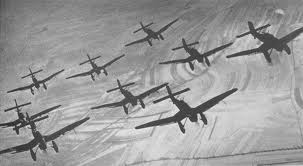
The strategy for minimizing any surprise air attack followed what was called the law of the third, which required that a third of the fleet be permanently kept away from the base. Thus, the aircraft stayed in the air, ready to bomb the enemy immediately.
It was winter, cold at –20°C, with heavy snow, short and gloomy days, the sun never appearing, and very long nights. The aircraft from the nearby military base came and went as far as Czechoslovakia. They produced a dreadful, intermittent noise that lasted the entire time. It was mournful and melancholy, yet deep down one felt that they were there to protect us.
Today, in full peace, we have in São Paulo the harmful effects of our airways passing over strictly residential neighborhoods, even far from Congonhas Airport, as in the case of Alto dos Pinheiros, where planes and helicopters pass at very low altitude in the morning, afternoon, evening, or the middle of the night. There are moments when you get the impression they are inside your home!
Clearly the problem has a solution: it is enough for the airways to pass over rivers, major avenues, industrial and commercial districts, or even over residential areas at higher altitudes, distributing the noise evenly among them all.
The law of the third was for protection; we have the law of the three thirds for aggression.
***