Jordano Araújo
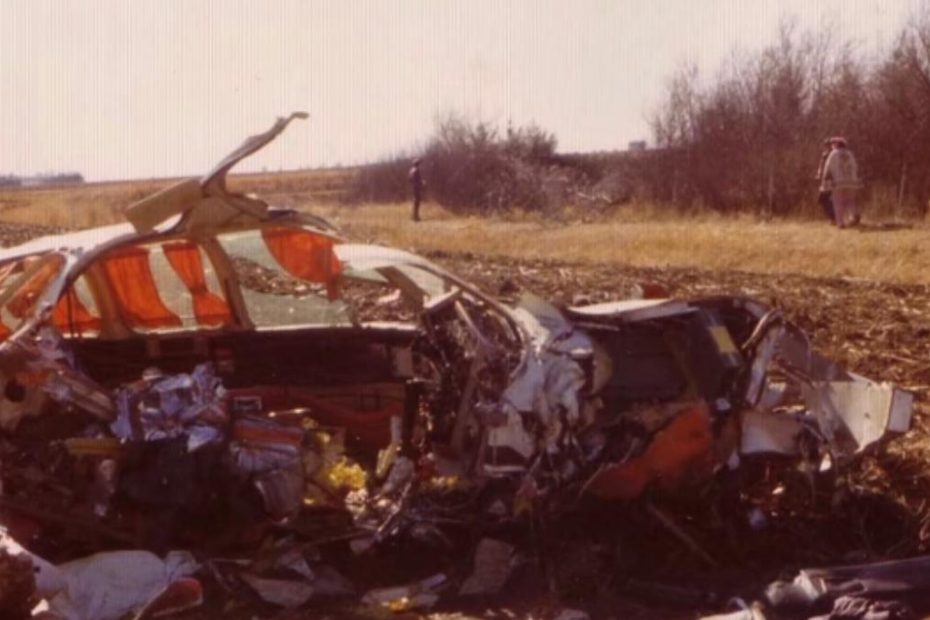
In the winter of 1976, a twin-engine Beechcraft Baron piloted by orthopedic surgeon James Styner was flying through a bank of clouds, bound for the city of Lincoln, Nebraska. Disoriented, the pilot tried to lose altitude and ended up crashing into the ground, in a situation known in aviation as CFIT (controlled flight into terrain).
On board were his wife Charlene and their four children: Christopher, Richard, Randal, and Kimberly. When Styner regained consciousness, he realized he had a serious wound on his forehead and pain in his chest, probably from fractures. Dazed, he began to grope in the darkness, afraid of what he might find.
From the back of the plane, a voice called out: “Dad?” He recognized it at once; it was his son Chris. The boy’s call made his mind immediately switch into action mode.
He found that Chris, despite fractures and injuries to his right forearm and hand, was the only person conscious. Richard, Randal, and Kim did not respond to stimuli, but at least their pulses were palpable. His wife Charlene, he later discovered, had been ejected from the aircraft and was dead.
Styner’s concern now was to get all the survivors out of the aircraft, which could catch fire at any moment. Once he had done so, he tried to cover them with whatever clothing he could find, since the freezing cold could kill them through hypothermia.
Injured though he was, he walked about a kilometer until he reached a highway. There he managed to flag down a passing car, which went with him to the crash site. They put all the children in the car, which took them to a rural hospital in the town of Auburn, Nebraska, USA. The hospital was closed. After managing to find the staff, Styner was distressed by the disorganized care and the lack of competence of the local team. When a doctor picked up his unconscious son to carry him to the X-ray room, the boy’s head tipped backward. Styner was horrified: “For God’s sake, stabilize the spine! He may have a cervical spine fracture!” The doctor gave him a questioning look, clearly not understanding the reason for his concern.
He demanded, shouting, that everyone be transferred to Lincoln, the city where he worked at Lincoln General Hospital. National Guard helicopters were called in and carried out the transport. Despite their serious injuries, they all survived.
This terrifying experience prompted Styner to act. He resolved to change the way trauma care was delivered.
Together with other local physicians, from the Lincoln Medical Education Foundation and the University of Nebraska, he examined the standardization methods for emergency care. In the USA there already existed the so-called ACLS (Advanced Cardiac Life Support), a training system in which cardiac emergencies are addressed by priority criteria, based on the fundamental premise of the English saying “first things first.”
Borrowing the principles of ACLS, they created a course called ATLS (Advanced Trauma Life Support), which teaches that the most life-threatening conditions are treated first.
In 1980, this course was “adopted” by the American College of Surgeons and came to be taught to millions of physicians around the world, including in Brazil.
ATLS is today the foundation of trauma care throughout the world and has probably helped save millions of lives and prevent lasting harm. And it all began with a father who, under incredibly adverse conditions, fought to save his children.
Congratulations to all the fathers who do everything possible (and impossible) to care for their children!
PS: If you enjoy this topic, I suggest watching James Styner’s own testimony (https://www.youtube.com/watch?v=xgoh6OXEnBw) or reading the book by his son Randal about the event (STYNER, R.; FARLEY, T. The light of the moon: life, death and the birth of advanced trauma life support. 2012.)
Images:
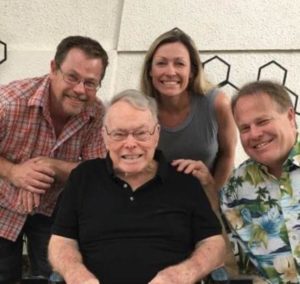
1. James Styner with his family
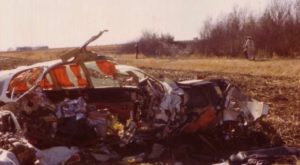
2. Wreckage of the crash
Sources:
CARMONT, M. The Advanced Trauma Life Support course: a history of its development and review of related literature. Postgraduate medical journal, v. 81, n. 952, p. 87, 2005.
COLLICOTT, Paul E. Advanced trauma life support (atls): past, present, future-16Th stone lecture, American trauma society. Journal of Trauma and Acute Care Surgery, v. 33, n. 5, p. 749-753, 1992.
STYNER, R.; FARLEY, T. The light of the moon: life, death and the birth of advanced trauma life support. 2012.