Prof. Dr. Gerson Novah
Professor of Anatomy at the Ribeirão Preto School of Medicine
1953
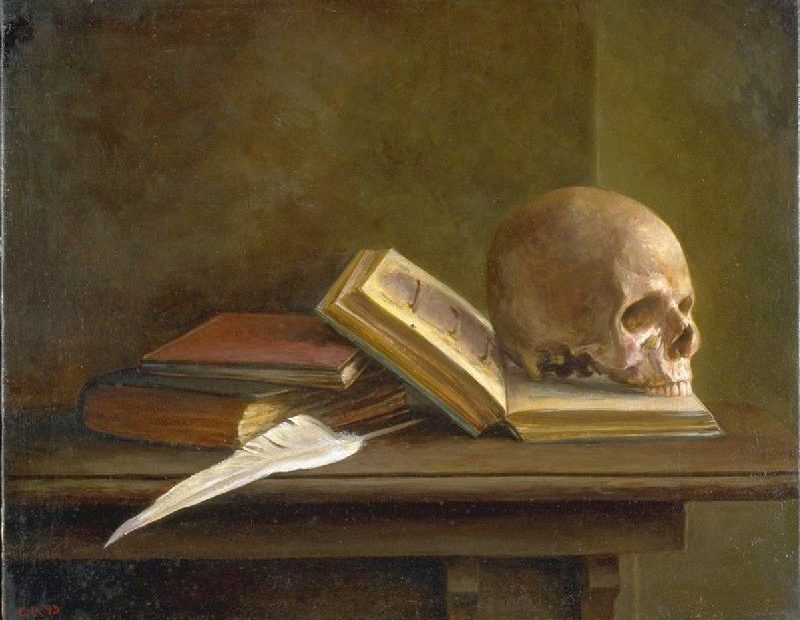
Figure 1 – Elsie Russell, The Anatomy Lesson, 16″ x 20″, oil on canvas, 1993 (taken from: www.parnasse.com/erlist.htm)
“My students:
Upon entering this Faculty, you passed through an austere, competent, and rigorous examination; its result is eloquently expressed in your very presence in this room, in those happy expressions of victory and of effort rewarded.
You know that victory and effort bring incontestable rights. I wish to speak to you a little about those rights. The first of them, certainly a great one though not the greatest, is that it grants you, in this discipline, a calmer study, almost carefree, without the dangers of cadaveric infection, without the dangers of contagion—risks and dangers entirely removed by the advent of formalin embalming of cadavers.
Some of you, less restrained, quicker to judge and readier to smile, may find this right banal, almost commonplace, even insignificant—a true contradiction of the great effort demanded of you. You would be wrong, if you recall that Anatomy passed through dark and difficult days, through a frighteningly tragic past, in an age when public opinion, dominated by a mysticism respectable up to a point but wholly unenlightened, strictly forbade the study of Anatomy on cadavers.
Whoever practiced it would be subject to the vengeful, primitive fury of a bloodthirsty horde of mystics ready to perpetrate the most primary of justices… or rather, the most primary of injustices…
Yet the anatomists of that time, martyr-geniuses of knowledge, braving the danger of being deemed violators of cadavers, at nightfall, sheltered by the darkness, aided by the dim light of the moon—that eternal accomplice of the heart—those anatomists, I say, joined the vultures of the fields to steal the corpses of executed criminals, which swung from somber trees like strange pendulums of the clock of human justice.
Once the prey was stolen—already putrefied at times, at others still bleeding—the nocturnal usurper, risking every sort of infection, cadaveric infection, and the dangers inherent in the undertaking, without any means of preservation, carried out, under the anguishing weight of so many threats, the great discoveries that honor and exalt the science of anatomy.
At other times matters unfolded differently; once the criminals were executed, their bodies were to undergo a regular burial. The difficulties were now greater; it was necessary for clandestine vandals to carry out, in the cemetery itself, at night, the exhumation of the cadaver. But once the intent was known, shock groups were organized, armed and hidden, prowling among the tombs to await the exhumers; the encounters were terrible and often fatal.
In that era a well-known English anatomist was approached by a man who offered to sell the body of an executed criminal that was to be buried that very afternoon—stolen at dusk and delivered, that same night, to the man of science.
Restless, impatient, alone, he watched the hours pass without any word arriving. Night was already yielding to dawn when, in the heavy silence, a distressed and violent knocking at the door announced the messenger’s arrival; a figure, with manifest effort and difficulty, carried on its back another that was inert, abandoned, still bleeding. The one who brought the cadaver was not the man who had made the deal; it was a female figure, an image of pallor and suffering, of anxiety and despair, of martyrdom.
There had been a struggle; the cadaver could not be stolen; the pressing need to provide for that woman’s household was great; her husband, the man who had made the deal, had fallen dead in the encounter. This was her husband’s final financial contribution—there lay his corpse, to be sold…
Tragic stories, and yet simple, isolated, and scattered incidents of the great tragedy of Anatomy.
Let us return to your rights. A second right you have earned, my students. The right to have duties, and, among those duties, there is one that exceeds all others: respect for the cadaver and for the solemnity of this place.
Remember that the making of the physician, and his entire life, is shaped amid death and pain: beside the cadaver, or beside the patient’s bed. As in a cemetery, one enters a department of Anatomy with one’s heart and soul. In the former, in despair and grief; in the latter, with respect and gratitude.
Remember that here “death takes delight in aiding the living”; remember that in our dealings with death we often find a meaning for our own lives.
Do not treat the cadaver as mere study material. Contemplate, in the frozen, colorless, almost transparent face of the dead, in the serenity of the countenance, how it may conceal from you the bitterness of the castaway or the agony of prolonged suffering; contemplate in that emaciated body, in those limbs piously abandoned and fallen, someone who perhaps was still alive yesterday; someone who, like us, had a childhood, a family, affection, a home; someone who was once a child and was once young; who had sorrows and joys, hopes and disappointments—but who, unlike us, who count on the complicity of a favorable destiny in birth, in growth, in education and instruction, was reserved by the strange play of chance only the place of the outcast, the social castaway, the human rag.
Remember that they lacked everything, even the friendly and welcoming gaze that, however embittered, might have received, in that anguished and final instant, the last appeal, the last plea, the last flicker of life.
Remember, too, that however burdensome, useless, harmful, or noxious these remnants of humanity may have been, the service they now render to the common good—to this and to future generations—redeems their guilt for having been the misfits of their generation.
My students: these counsels are not new, nor are these ideas mine. They are counsels and ideas that speak to the heart and to the never-belied nobility of youth. They are therefore common property; they are universal. Heed them—that is my request; heed them—that is your duty. They will not fail to speak to the sensibility of future physicians.
And remember still: either you have, at this very moment, the sensibility of a physician, or you will never have it. Today is the true day of your professional decision; if you do not feel worthy of the sacerdotal vocation, then for our good, and even more for your own good, cross today for the last time the narrow threshold of this door, which represents the threshold of medical initiation—for if you do not worthily wear the robes of the novice, you will never worthily wear the sacred mantle of the priesthood.”