Prof. Dr. Irany Novah Moraes
Happiness is where we place it; we never place it where we are.
VICENTE DE CARVALHO
poet of Santos
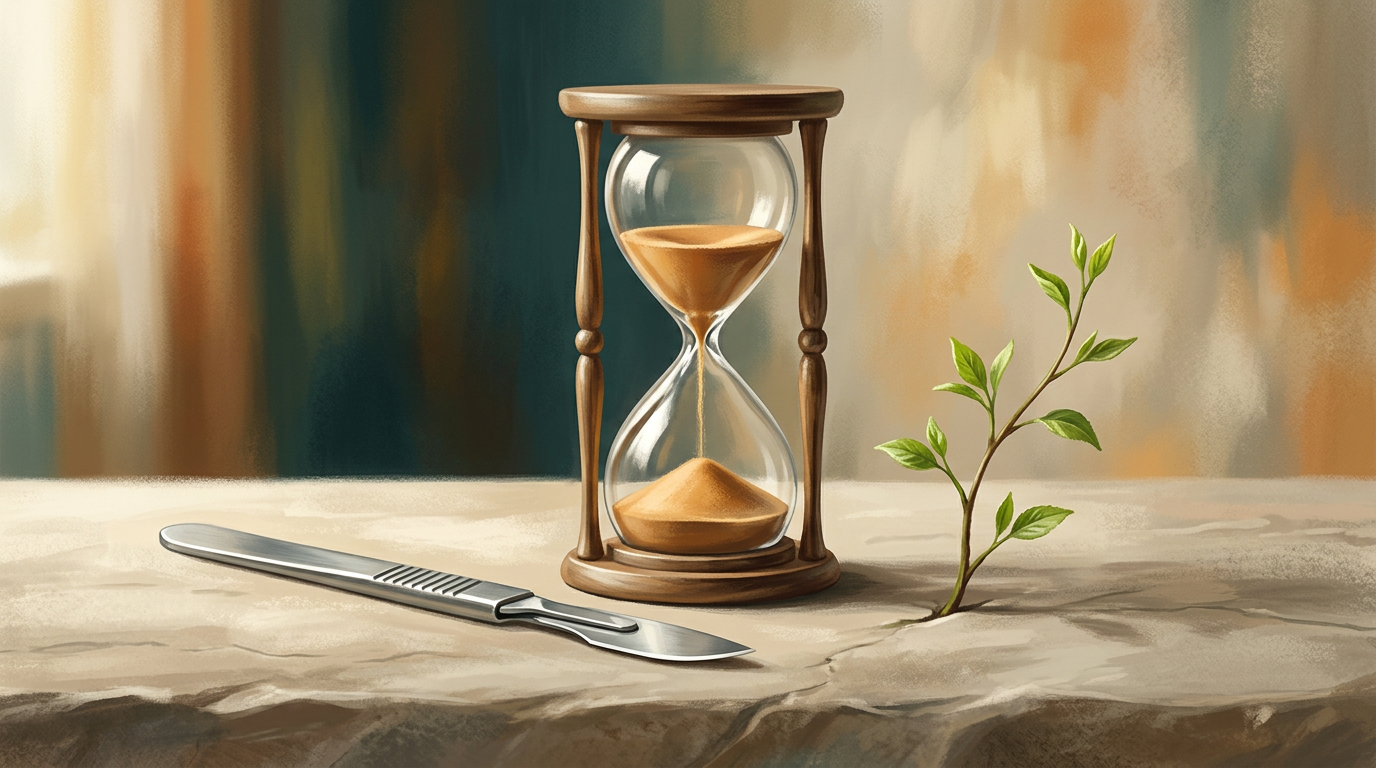
In days gone by, the pharmacies of the country’s interior displayed pictures bearing messages of health, of conduct, and advertisements for the “tonics” of the time. I remember one, in sepia, pale and evoking antiquity, that showed two roads departing from a single point and leading to opposite destinations.
One of them, narrow, winding, climbing the mountain, passing through difficult stretches with steep places, broken by rocks, cut by streams, with an enchanting view of waterfalls, flowering trees, and, in the background, a horizon covered by a marvelous blue sky: it was the road of good, with a difficult journey but with paradise as its destination.
The other, broad and in dizzying descent, bordered by numerous representations of lasciviousness, symbolized the road of evil.
The iconography described represented two options of life for the human being. Reflection in the search to understand this dilemma – good or evil – leads to each person’s state of mind, in order then to seek to understand the reason for choosing one of the two options. The state of mind of the human being arises fundamentally from individual temperament, from the atmosphere of the home, from education, from friendships, and from a deliberate stance that values the facts and one’s own experiences. At any moment, a strong inner resolve, conditioned by the example of the family or by chosen paradigms, can change the trajectory of a life; whether for good or for evil, with the natural consequences of destiny: joy or bitterness.
In the first case are the optimists, full of dreams and content with life. These intuitively find positive and pleasant reasons in the facts of everyday life, but above all if they have the pleasurable awareness of the well-being they feel. The exercise of always seeking to see the good side of events generates in the subconscious a condition favorable for the individual to cultivate good humor and the joy of living – in this context are those who “do not distinguish work from leisure and, in both, take pleasure.” This road brings happiness!
In the second are the pessimists, dominated by their inner ghosts, who see only the bad side of things. They are temperamental individuals, “harsh,” rude, ill-humored, neurasthenic, envious, in intermittent existential crisis; if they are not already so, they quickly become wicked, perverse, frustrated, repressed, and, deep within, profoundly unhappy.
These variations in state of mind reflect, or are reflections of, the individual’s self-love, so that one who “knows how to like oneself” has enough self-esteem to take care of oneself, to know how to love one’s neighbor, and to hold no grudges. Thus, they rationalize the problem of stress, as well as of setbacks and difficulties, refining their wisdom for living, learning to reap the benefits and consequently improving their quality of life, in the present and in the future.
By contrast, those who go against the grain of good are dominated by feelings that reveal an exaggerated opinion of themselves, with arrogance, presumption, and vanity. These envy the success of others, distill hatred, cling to the idea of harming their neighbor, and thus place themselves progressively in the vicious circle of evil.
The two roads represent the paths that life offers the human being. In truth, the individual can, at any moment, alter their destiny by the simple, but difficult, change of stance. Such an attitude immediately causes a bridge to appear, carrying them to another trajectory. Being on the first, on the road of good, if a morbid ghost of the mind makes them fall into temptation, they easily descend, lower their morals, break the ethical principles, and change their destiny. Likewise, one already lost, having an illumination, can be redeemed; the bridge of rescue appears and, as if at a summons, they change their behavior and come to follow the narrow road of good. The change of life reveals a true metamorphosis!
In the article CÂNONES DA BELEZA (Canons of Beauty), which I published in this CULTURAL SUPPLEMENT (Dec. 2000) of the journal of the Paulista Medical Association, I commented that the course in artistic anatomy that I taught at the SCHOOL OF FINE ARTS OF SÃO PAULO awakened in me a constant search for the portion of beauty contained in everything I observe. This way of being has accompanied me over time, and I am certain it made me see life with kind eyes. I ended that article by recommending that one consider, in this context, the emotion that occurs on seeing form, in the ensemble of harmonic proportions, transform itself into a mirage — and this mirage revealing the beauty of life!
The privileged ones of the first path have a virtue that adorns human conduct – humility; whereas those who chose the second path have conduct stained by pride.
I have come this far comparing the journeys along the two roads. Here I leave those of the second path. I hope that destiny, making them unhappy for all their lives, may not be even more cruel than it already was in granting free will and permitting the option they chose; renouncing humility to embrace pride.
In a recent publication in O Estado de S. Paulo (06/07/2003), one of our greatest thinkers – MIGUEL REALE says: … “Philosophically, for me, humility means the renunciation of the powers of reason before the problems that transcend it, to which we ascend by the ways of love. It is perhaps in this position that Einstein’s humble confession is situated, when he acknowledges that ‘behind matter there is something inexplicable,’ in contrast to those who, proud of the conquests of reason in the world of the positive sciences, deny God and the immortality of the soul.”
If you are not on the first path, there is still time! Reflection will illuminate you to reverse your course; the bridge of rescue will appear, and once on the road of good you will find joy. Happiness is where we place it; place it wherever you are.